
PLC and HMI Programming: Building Smarter and More Efficient Industrial Automation Systems
Introduction
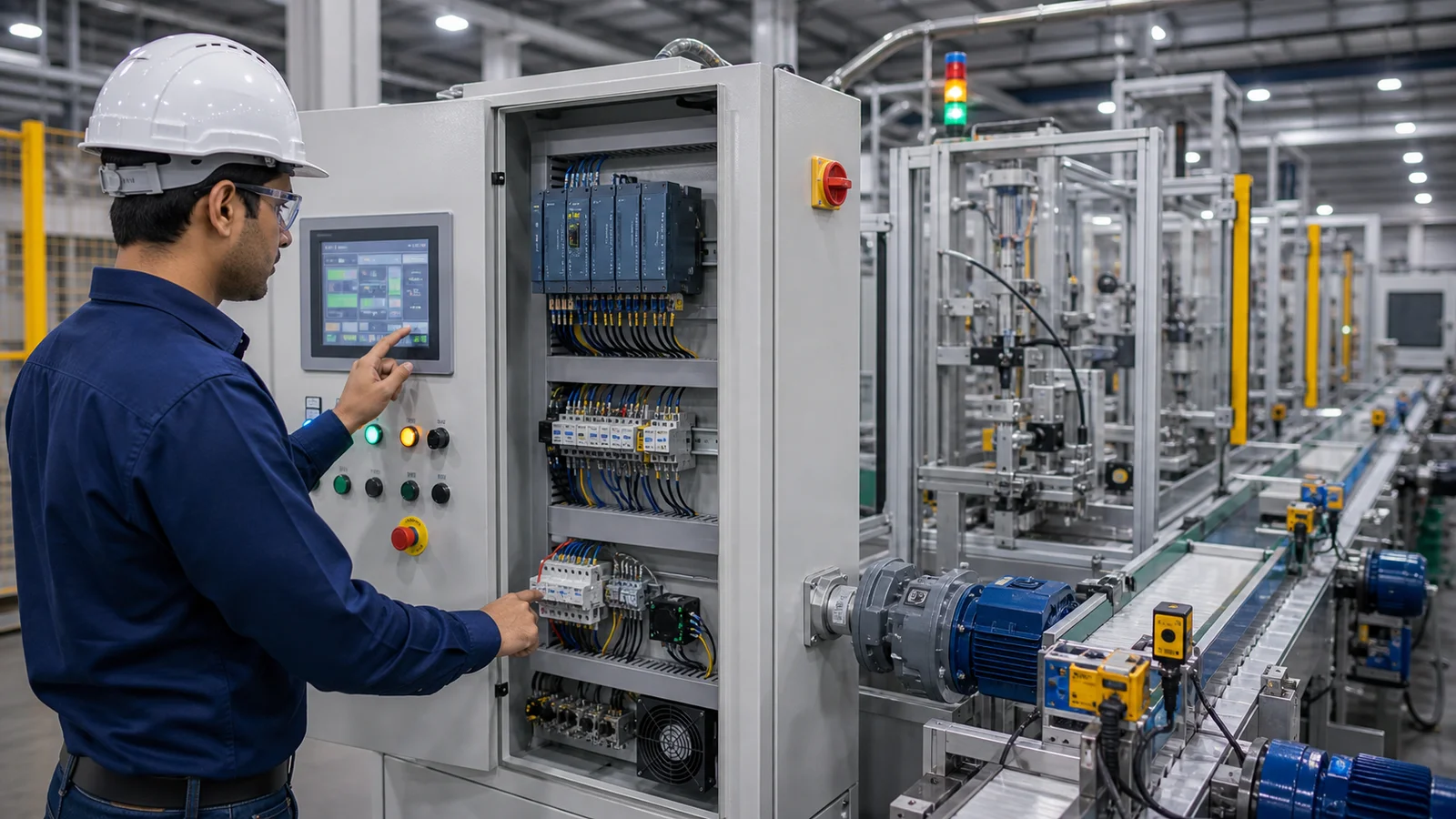
Industrial automation plays an important role in modern manufacturing. From controlling individual machines to managing complete production lines, automation helps industries improve process control, maintain production consistency and reduce manual operations.
Two essential technologies behind these automated systems are Programmable Logic Controllers (PLCs) and Human Machine Interfaces (HMIs).
A PLC acts as the control unit of a machine. It processes input signals, executes programmed instructions and controls connected equipment. An HMI provides an interface through which operators can monitor machine conditions, adjust operating parameters and manage production activities.
However, selecting the right PLC and HMI hardware is only the beginning. Proper programming, system integration and configuration are equally important for achieving reliable machine operation.
Let's understand how PLC and HMI programming work, their industrial applications and how professional engineering support can help manufacturers develop better automation systems.
1. What Is PLC Programming?
A Programmable Logic Controller (PLC) is an industrial computer designed to control machinery and automated processes.
PLC programming involves developing the control instructions that determine how a machine operates under different conditions.
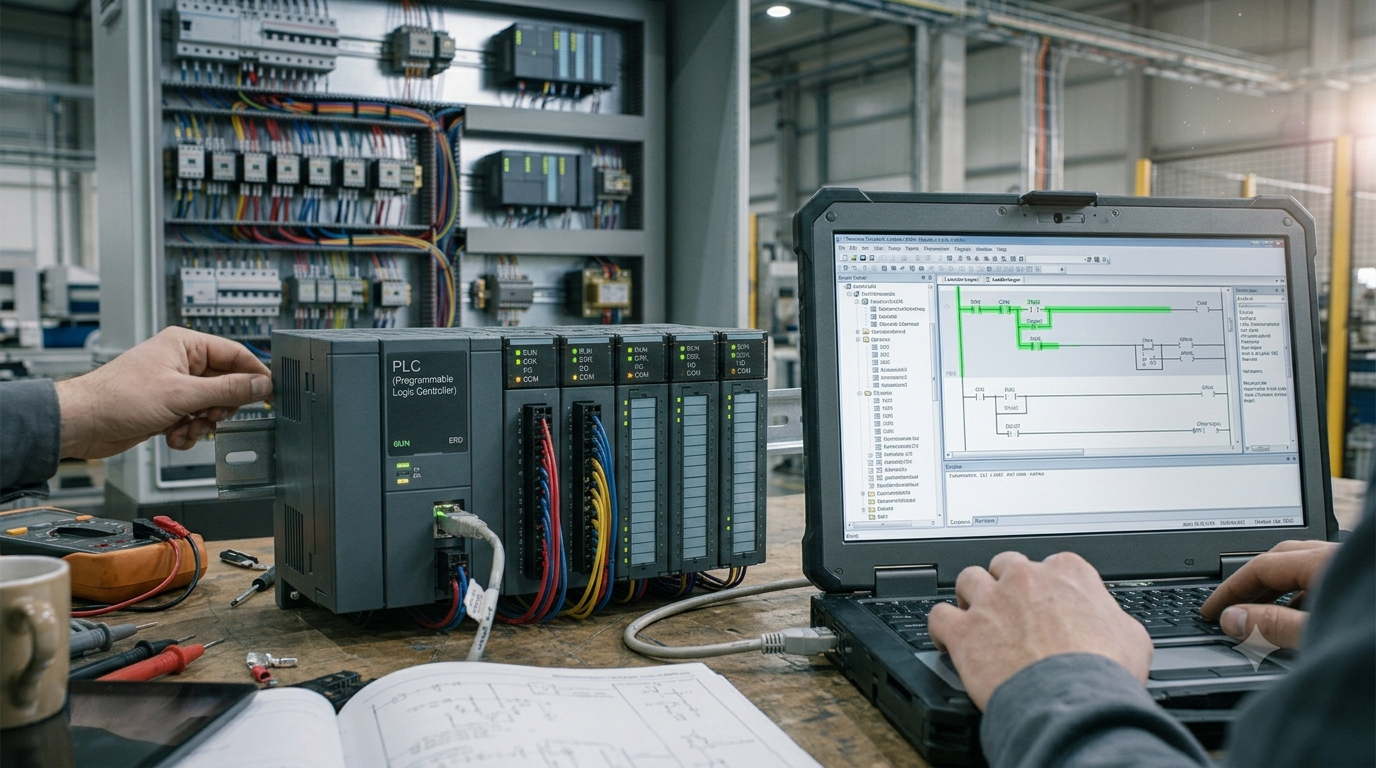
For example, in an automated production line, a PLC can manage:
- Motor starting and stopping sequences.
- Sensor-based object detection.
- Conveyor movement and speed control.
- Temperature and pressure monitoring.
- Automatic machine operating sequences.
- Timers, counters and production cycles.
- Fault detection and alarm conditions.
Common PLC Programming Languages
Depending on the PLC platform and application, engineers can use different programming languages:
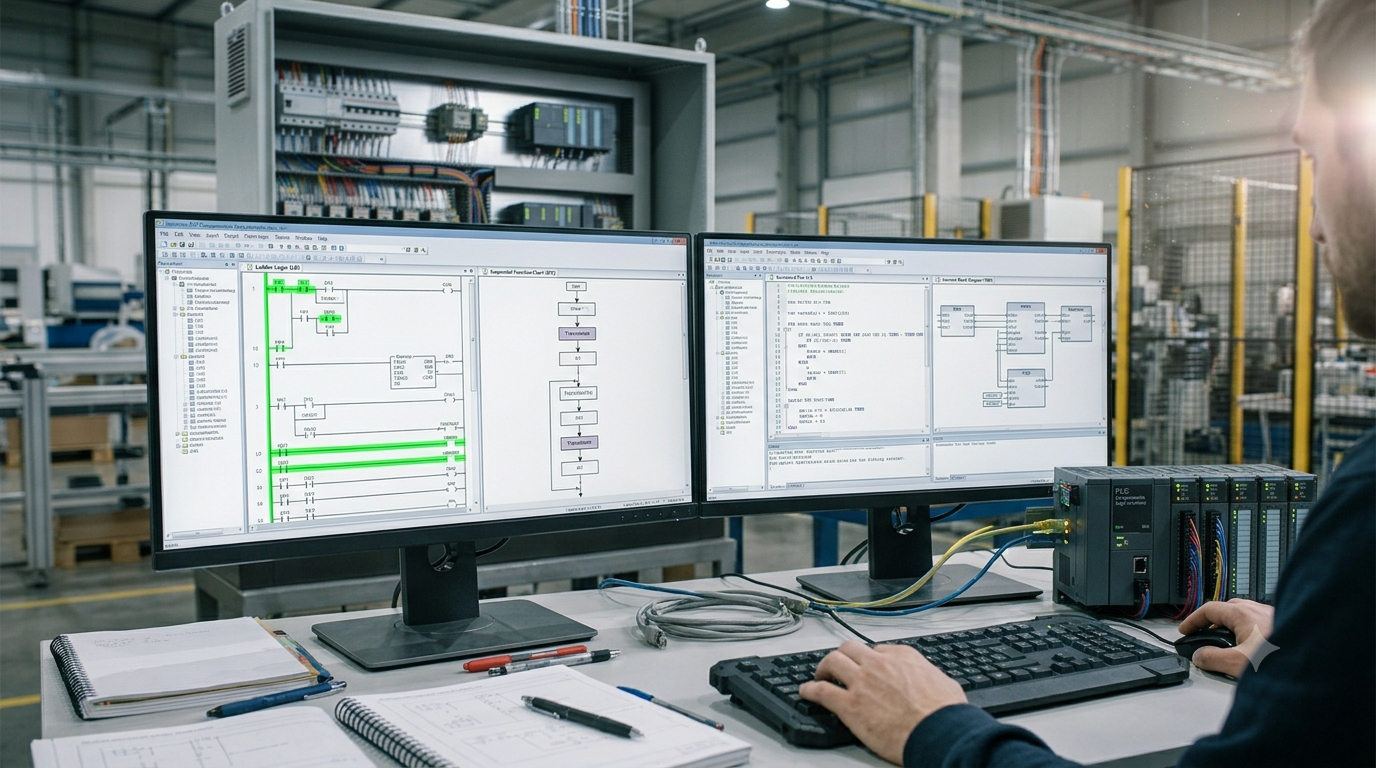
- Ladder Diagram (LD): A graphical programming language commonly used for industrial machine control.
- Function Block Diagram (FBD): Uses interconnected function blocks to develop control operations.
- Structured Text (ST): A text-based language suitable for calculations and complex control logic.
- Sequential Function Chart (SFC): Organizes machine operations into individual steps and transitions.
The programming language is selected according to the machine requirements and the capabilities of the PLC.
2. What Is HMI Programming?
A Human Machine Interface (HMI) is a graphical interface that allows operators to communicate with industrial machines and automation systems.
HMI programming involves designing screens, configuring communication with the PLC and developing functions that allow operators to monitor and control machine operations.
A properly designed HMI can provide:
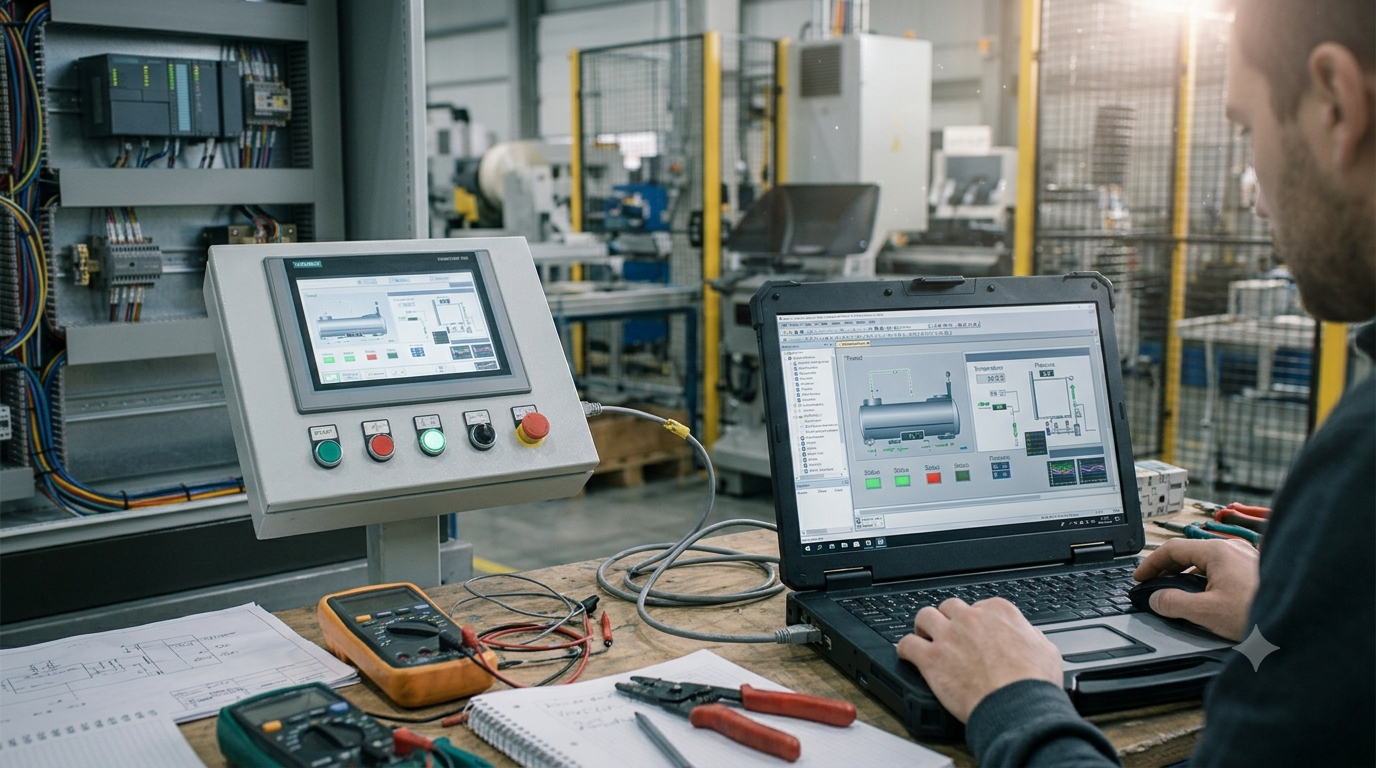
- Machine Status Monitoring: Displays whether equipment is running, stopped or experiencing a fault.
- Parameter Settings: Allows operators to enter operating values such as speed, temperature and production settings.
- Alarm Management: Displays warnings and fault messages.
- Trend Displays: Shows changing process values over time.
- Manual and Automatic Modes: Provides controls for selecting machine operating modes.
- Production Monitoring: Displays production quantities, operating hours and cycle counts.
The objective of HMI programming is to make machine operation easier by presenting important information in a clear and organised format.
3. How Do PLC and HMI Work Together?
PLC and HMI systems perform different functions but work together to control and monitor industrial operations.
The PLC executes the control logic, while the HMI provides an interface for operators to interact with the system.
Let's understand this with an industrial conveyor application.
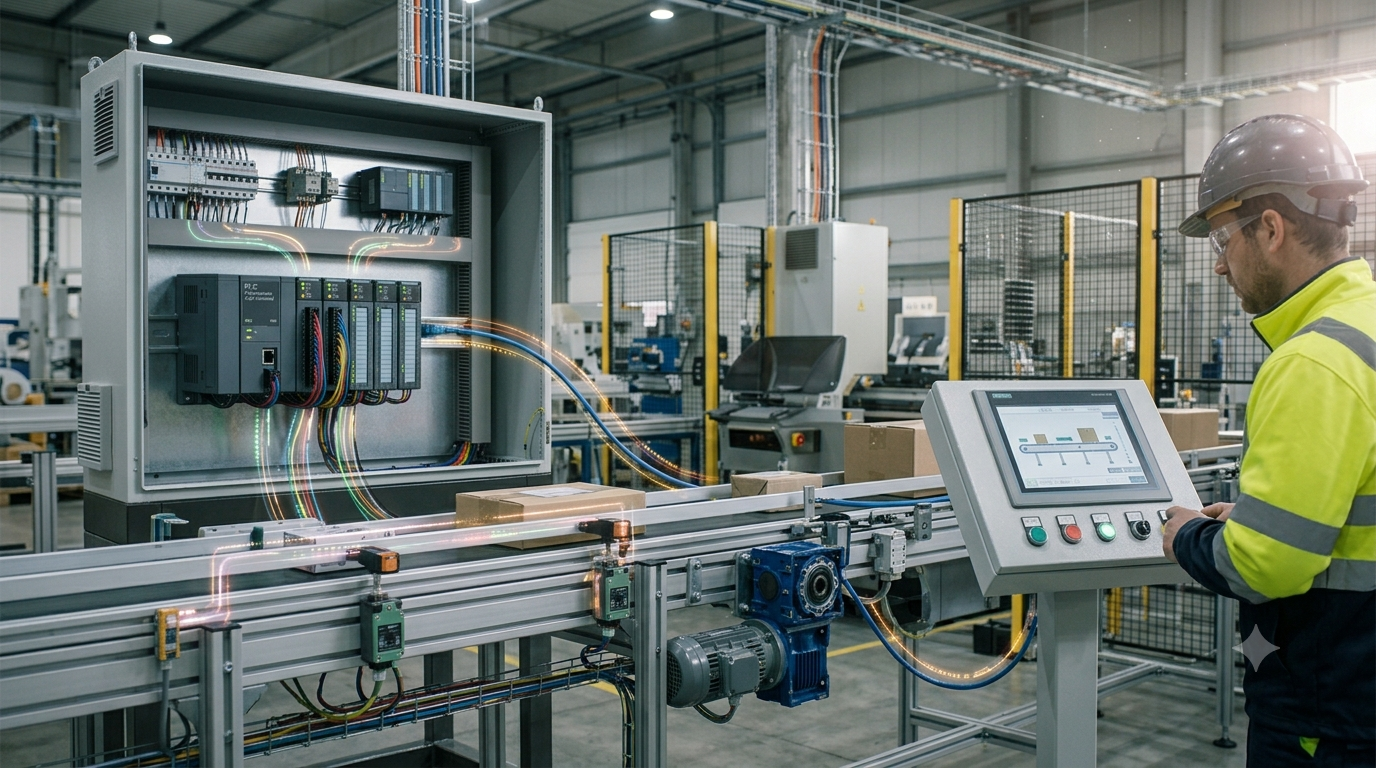
Example: Automated Conveyor System
- The operator selects automatic mode from the HMI.
- The HMI sends the command to the PLC.
- The PLC checks the required operating conditions and input signals.
- The PLC activates the motor control output.
- Sensors detect products moving along the conveyor.
- The PLC processes sensor signals and manages the conveyor sequence.
- The HMI displays operating status, production information and configured alarms.
This coordination allows operators to monitor machine operations and manage the process through a central interface.
Communication between PLC and HMI devices can take place through protocols such as Modbus RTU, Modbus TCP, PROFINET and other supported communication methods, depending on the selected equipment.
4. Industrial Applications of PLC and HMI Programming
PLC and HMI programming are used across various manufacturing and industrial applications.
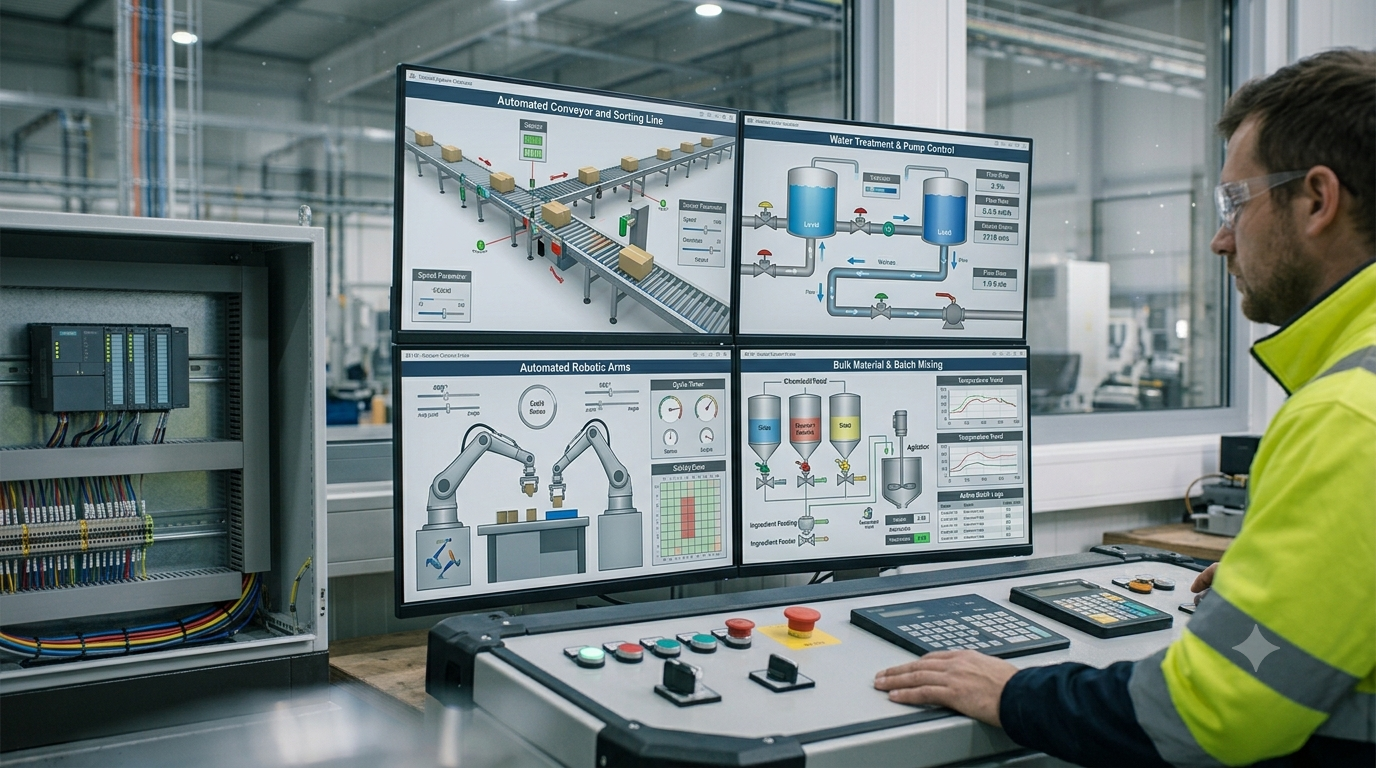
Packaging and Filling Machines: Control filling quantities, product counting, sealing operations and packaging sequences.
Conveyor Systems: Manage motors, sensors, product movement and material handling operations.
Industrial Heating Systems: Process temperature feedback, control heating sequences and display temperature settings.
Manufacturing Production Lines: Coordinate machine operations, monitor production status and manage operating sequences.
Water and Pumping Systems: Control pump operations, monitor tank levels and manage pressure conditions.
Custom Machine Development: Develop application-specific control logic and operator interfaces according to machine requirements.
These applications demonstrate how PLC and HMI programming support different industrial processes.
5. Important Factors to Consider Before PLC and HMI Programming
Successful automation development begins with understanding the machine and its operational requirements.
Before starting a programming project, engineers should consider:
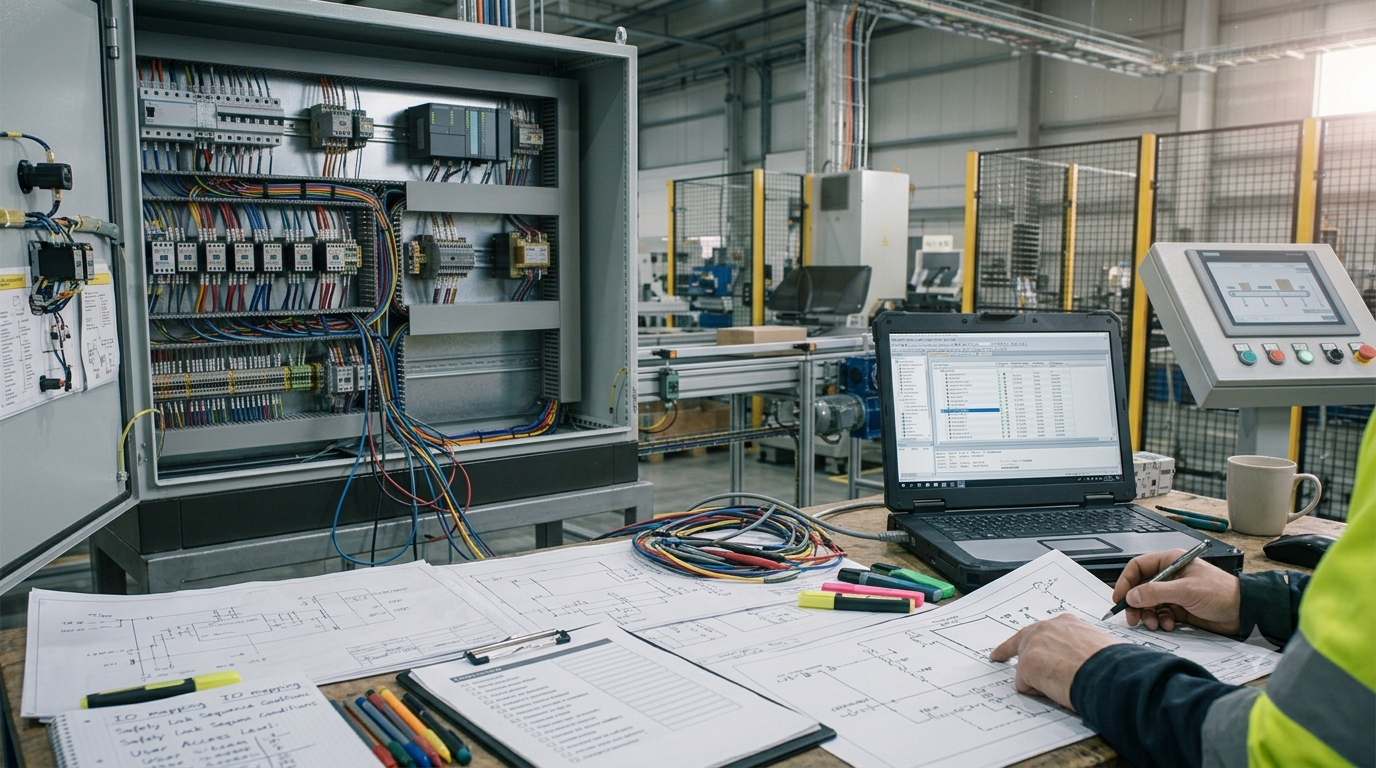
1. Application Requirements: Understand the machine's operating sequence, production requirements and process conditions.
2. PLC Selection: Consider the required input/output points, processing capabilities, communication interfaces and future expansion requirements.
3. HMI Selection: Check display size, resolution, communication ports and operator accessibility.
4. Communication Compatibility: Verify compatibility between PLCs, HMIs, drives and other connected devices.
5. Control Logic Development: Develop structured programs with suitable operating conditions, interlocks and fault-handling logic.
6. HMI Screen Design: Create organised screens with clear labels, operating parameters and machine status information.
7. Testing and Commissioning: Verify inputs, outputs, operating sequences, communication and alarm functions before regular operation.
Safety-critical functions must also be designed using appropriate safety-rated devices and circuits rather than relying only on standard PLC programming.
6. Why Professional PLC and HMI Programming Matters
Incorrect programming or poor system configuration can affect machine performance and make troubleshooting difficult.
Professional engineering and programming help address common challenges such as:
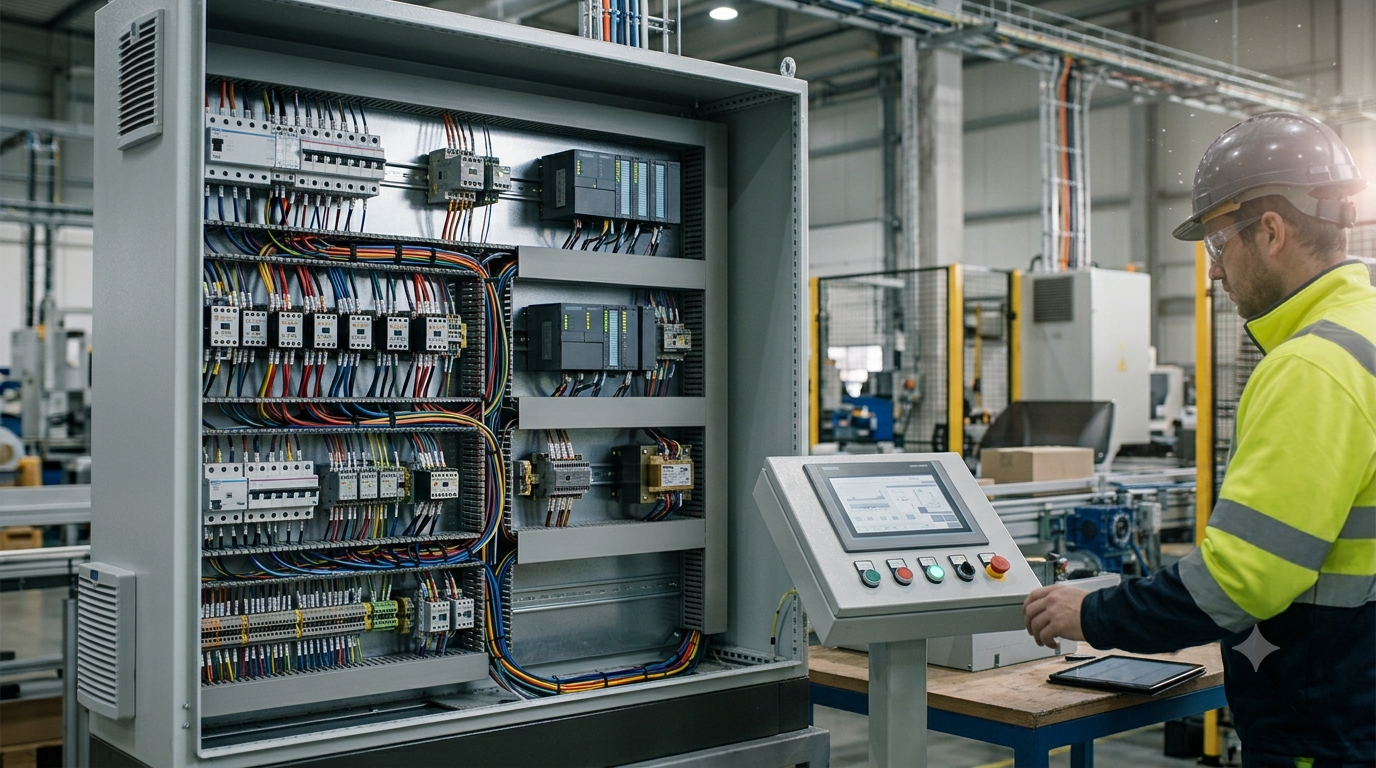
- Incorrect machine operating sequences.
- Communication errors between automation devices.
- Poorly organised HMI screens.
- Improperly configured alarms.
- Difficult troubleshooting and future modifications.
- Integration problems between different hardware platforms.
A properly developed system can provide better machine control, improved process visibility, easier operation and more organised maintenance.
7. PLC and HMI Products Available on TPIPro+
Along with programming and engineering, selecting suitable automation hardware is an important part of any project.
TPiPro+ offers industrial automation products from different manufacturers for machine builders, maintenance teams, electrical engineers and procurement departments.
PLC – Programmable Logic Controllers
PLCs are used to manage machine logic, process inputs and control industrial equipment.
Explore these products:
HMI – Human Machine Interfaces
HMIs provide operators with machine controls, process information and operating status displays.
Explore these products:
Product selection should always be based on application requirements, communication compatibility and manufacturer specifications.
8. Why Choose Techno Park Inc. for PLC and HMI Programming?
Choosing the right automation partner is important when developing a new machine, upgrading an existing system or integrating different industrial devices.
Techno Park Inc. provides industrial automation and engineering services with a focus on practical machine and control-system requirements.
Here is how we support industrial customers:
1. Application-Based Engineering
Every machine has different operating requirements. We focus on understanding the application before developing suitable automation and control solutions.
2. PLC and HMI Programming Support
We provide PLC and HMI programming services for industrial machine control, process monitoring and operator interface requirements.
3. Complete Automation Panel Solutions
Our services include automation panel design and development to support industrial control-system requirements.
4. Machine Design and Development
We also support machine design and development for customers looking for customised engineering solutions.
5. On-Site and Remote Technical Support
Technical assistance is available through on-site and remote support for relevant automation and engineering requirements.
6. Industrial Product Sourcing
Through TPiPro+, customers can explore industrial automation and electrical products. We also assist with obsolete product sourcing and identifying suitable replacement components.
With engineering services and industrial product sourcing under one business, Techno Park Inc. can support customers across different stages of their automation requirements.
Planning Your Next PLC and HMI Automation Project?
Whether you are developing a new industrial machine, improving an existing control system or looking for PLC and HMI programming support, choosing the right engineering approach makes a difference.
Discuss your machine requirements, programming needs and automation challenges with our team.
Techno Park Inc. – Industrial Automation and Engineering Solutions
Our Services:
- PLC and HMI Programming
- Automation Panel Design and Development
- Machine Design and Development
- On-Site and Remote Technical Support
- Custom PCB Design
- Obsolete Industrial Product Sourcing
Explore our websites:
TPiPro+ – Industrial Automation Products
Have an automation requirement? Contact Techno Park Inc. today to discuss your project and request a quotation.
Need Custom Engineering for Your Facility?
Whether you are looking to retrofit legacy control cabinets, design high-precision heating systems, or source critical automation components, our engineering team is ready to help.