
Motor Control Is a System, Not Just a Motor
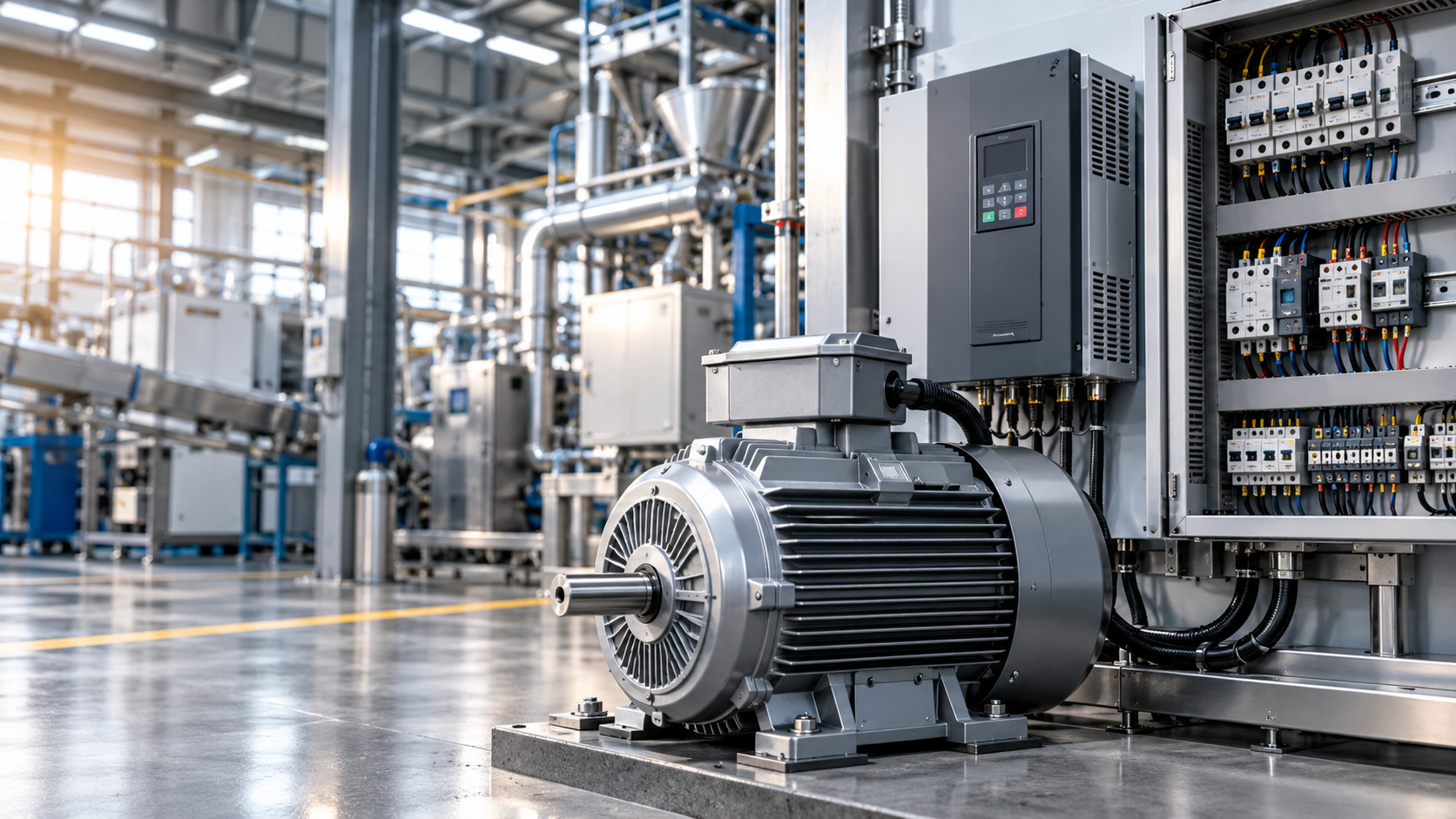
Motor Control Is a System, Not Just a Motor
Motor + VFD + Protection + Control: Building the Right Drive System for Industrial Applications
In industrial automation, a motor rarely works alone.
A motor may provide the mechanical power, but how that motor starts, stops, accelerates, runs at different speeds, and responds to abnormal electrical conditions depends on the components around it. The right combination of motor, variable frequency drive (VFD), protection devices and control components can make the difference between a properly engineered drive system and a collection of individually selected components.
For industrial users, therefore, the better question is not “Which motor should I buy?” but:
“What complete motor-control system does my application require?”
That is the approach Techno-park Inc. brings to motor control, combining industrial automation expertise with access to motors, drives and electrical control components through its B2B platform, TPIPro+. Techno-park Inc. has been working in industrial automation since 2009 and provides both engineering services and industrial hardware. Techno-park Inc.
1. The Motor: Start With the Load
Every motor-control system begins with the application.
The required motor depends on factors such as:
- Required power and torque
- Operating speed
- Duty cycle
- Starting characteristics
- Load type
- Installation environment
- Required efficiency
- Available supply voltage
For example, a conveyor, pump, fan, compressor and high-inertia machine may all require very different motor-control considerations even when their power ratings appear similar.
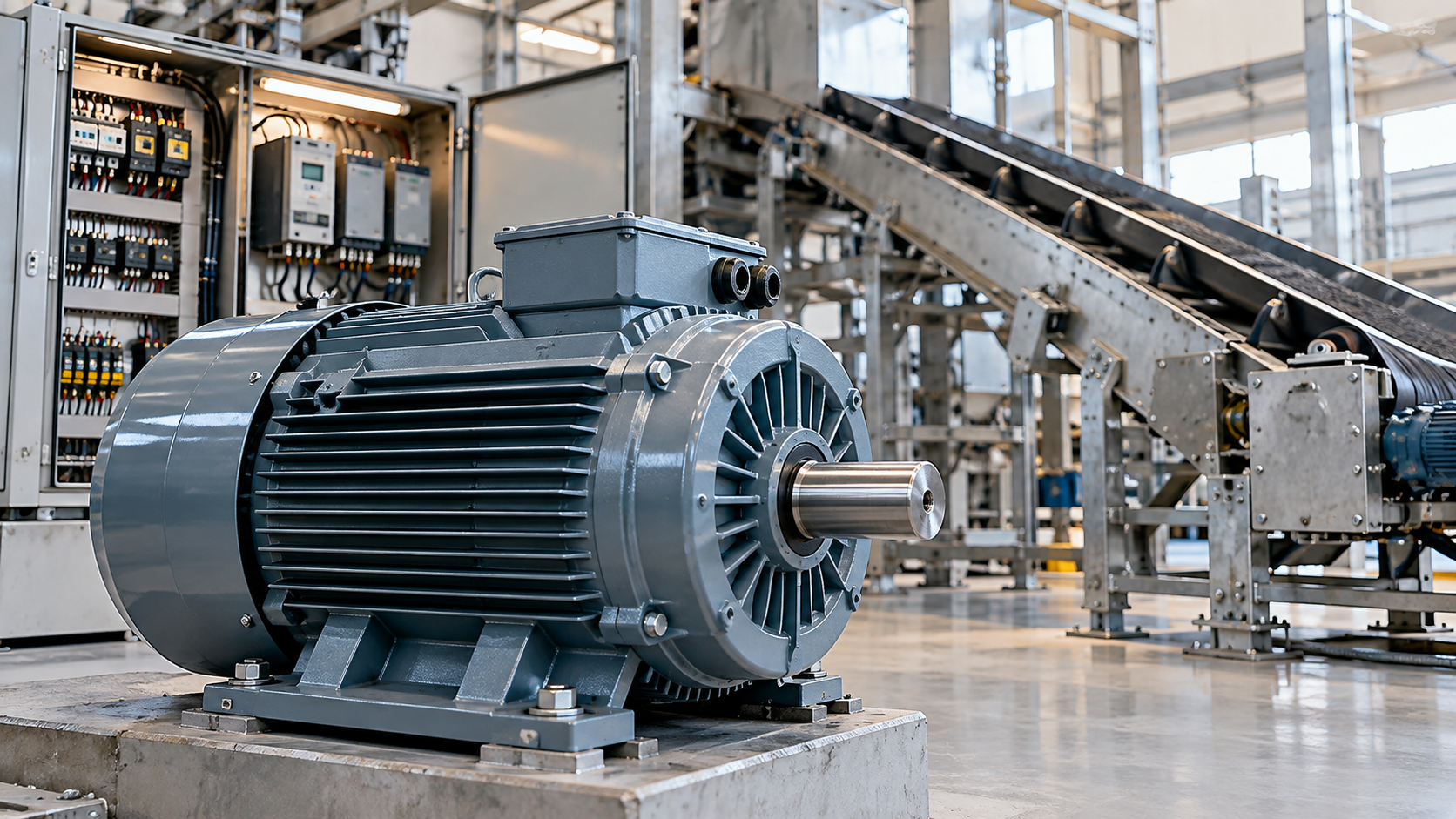
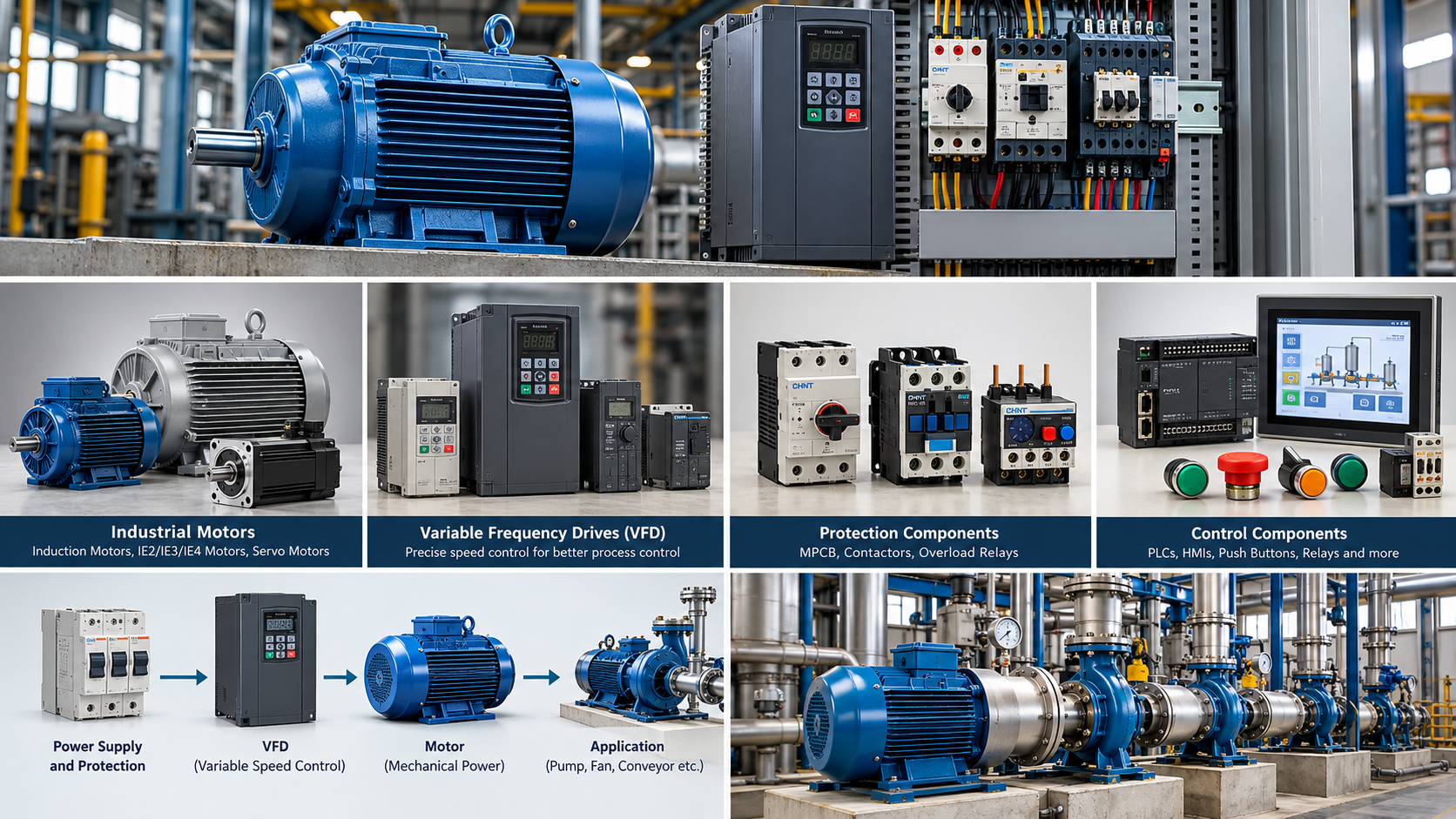
TPIPro+ currently lists a broad motor portfolio including induction motors, IE2, IE3 and IE4 motors, as well as servo motors. TPIPro+
One example is the Bharat Bijlee IE3 induction motor listed on TPIPro+, with a 75 kW rating, 415 V supply, S1 duty and IP55 protection. TPIPro+
Explore:
TPIPro+ Industrial MotorsExample: Bharat Bijlee IE3 Induction Motor
The important point is that motor selection should follow the actual mechanical and process requirement, rather than simply choosing the highest available horsepower.
2. The VFD: Give the Motor Control Over Speed
Once the motor is selected, the next question is often how it needs to operate.
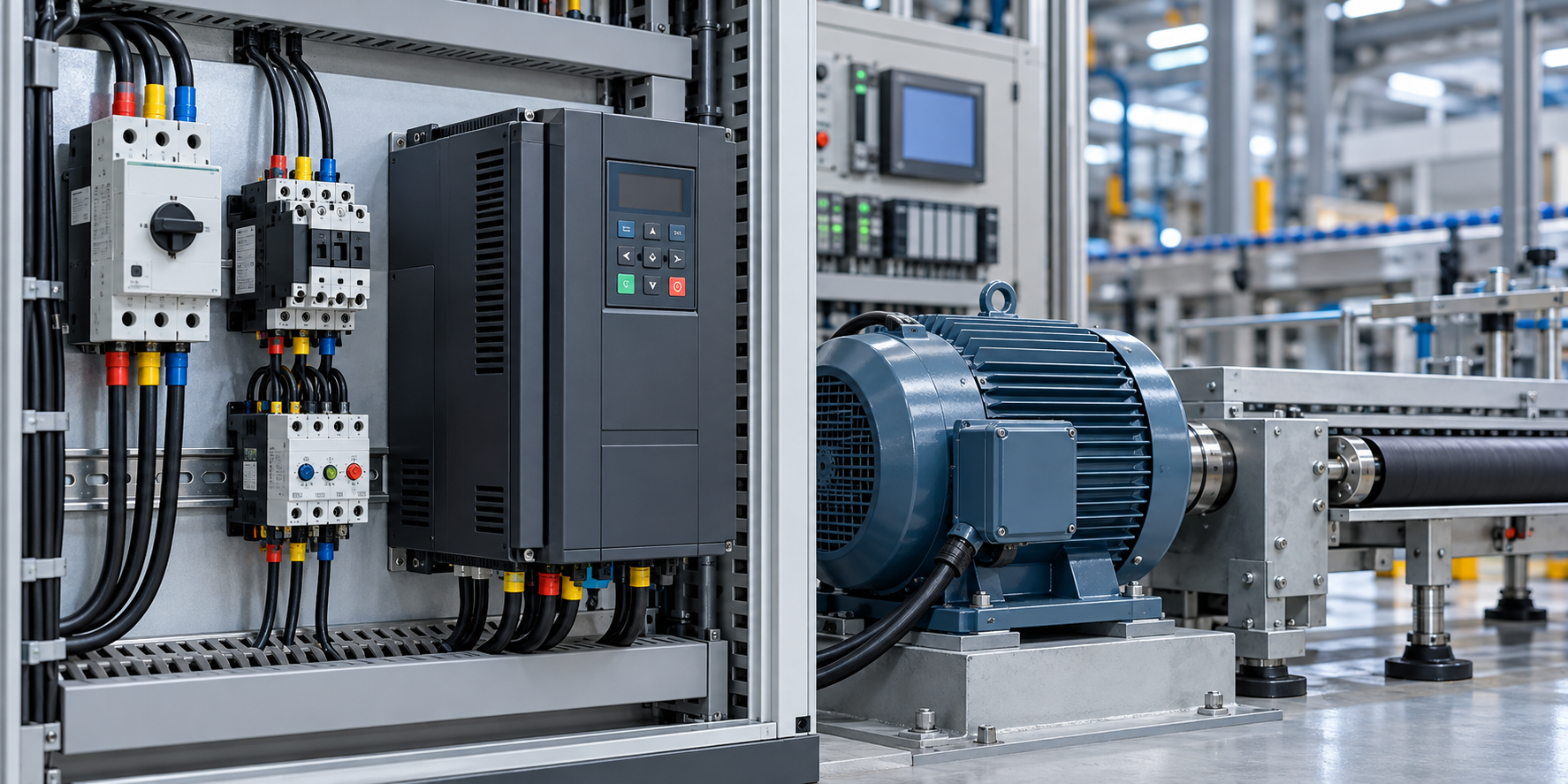
If the application requires variable speed, controlled acceleration or deceleration, or more precise speed and torque control, a Variable Frequency Drive (VFD) can become the central element of the system.
A VFD controls motor operation by varying the frequency and voltage supplied to the motor. This allows the motor to operate at different speeds according to the process requirement rather than simply running at full speed whenever it is switched on.
This can be particularly useful for applications such as:
- Conveyors
- Pumps
- Fans
- Blowers
- Process machinery
- Material-handling equipment
- Automated production systems
Techno-park Inc.'s VFD range includes products from brands such as Allen-Bradley, Siemens, Delta Electronics, Shihlin Electric and Mitsubishi Electric. Techno-park Inc.
TPIPro+ currently lists hundreds of VFDs from brands including Yaskawa Electric, Delta Electronics, Allen-Bradley, Schneider Electric and Shihlin, among others. TPIPro+
For example, the TPIPro+ catalogue includes a Yaskawa Electric VFD rated for motors up to 5.5 kW, with a 15 A rated output current. TPIPro+
Explore:
TPIPro+ Variable Frequency DrivesExample: Yaskawa Electric VFD – CIMR-G7A45P5
3. Protection: Because Control Without Protection Isn't Enough
A VFD may control the motor, but the complete system still needs appropriate electrical protection.
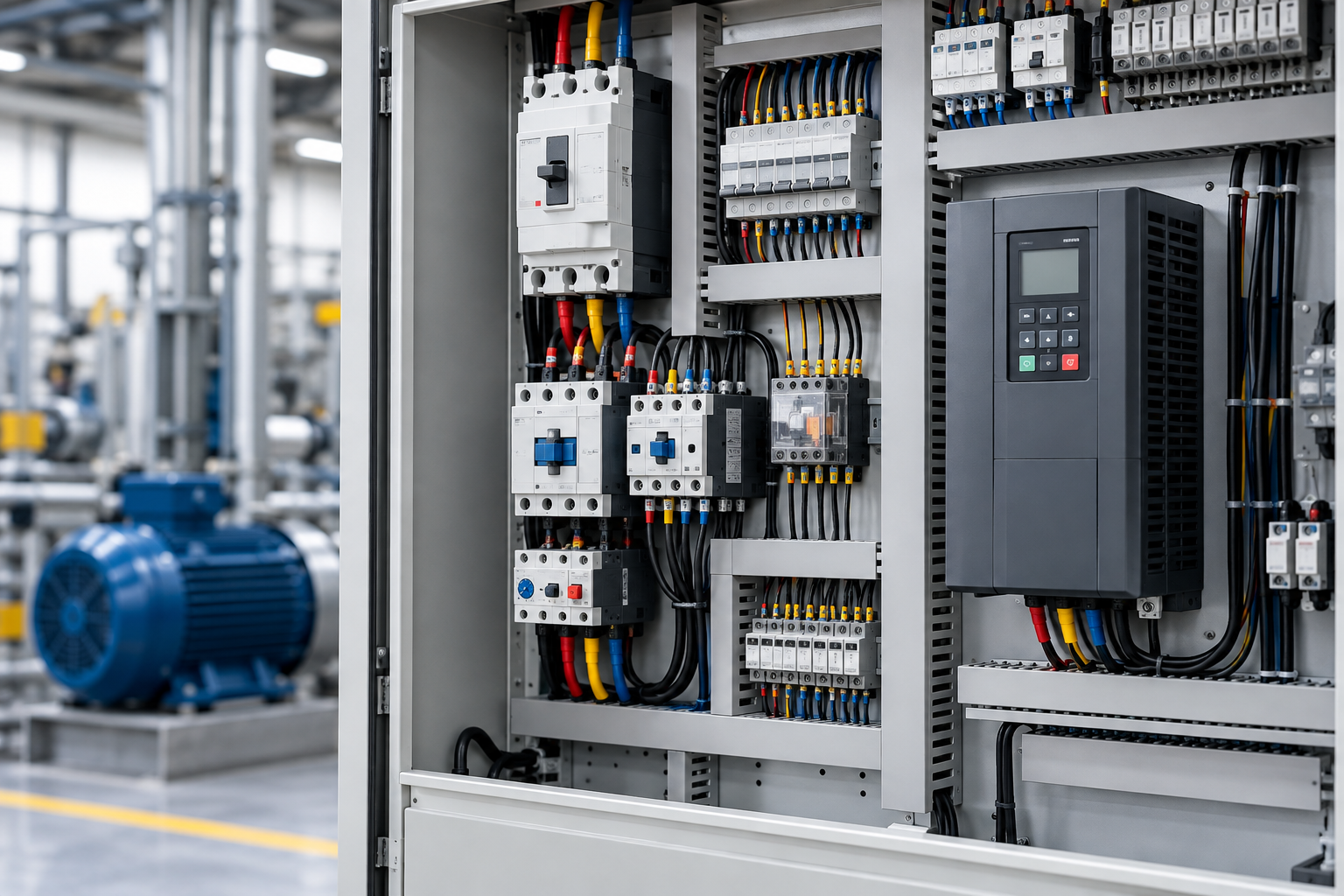
Depending on the architecture, this can include devices such as:
MPCB → Contactor → Overload Relay → VFD → Motor
The exact arrangement depends on the application and system design; these components should not be selected simply by matching their current ratings.
Motor Protection Circuit Breakers
An MPCB is designed specifically for motor circuits and provides a dedicated layer of motor protection.
TPIPro+ lists Chint Electric MPCBs across multiple current ranges. One example, the NS2-80B 25–40 A MPCB, has a 690 V insulation rating and is listed under Motor Protection Devices. TPIPro+
Example: Chint NS2-80B Motor Protection Circuit Breaker
Contactors
Contactors are commonly used for switching and controlling motor circuits. Their selection needs to consider factors such as operating voltage, coil voltage, current rating and utilization category.
For example, TPIPro+ lists the Chint NXC series, including contactors intended for AC motor control with AC-3/AC-4 utilization categories. TPIPro+
Example: Chint NXC-09 Contactor
Overload Relays
Thermal overload relays provide another important layer of motor protection in conventional motor-starting arrangements.
TPIPro+ lists a range of Chint OLRs, from smaller current ranges such as 2.5–4 A through higher-current variants. TPIPro+
4. Control Components Complete the System
Motor control doesn't stop at the power circuit.
Depending on the machine, the motor may need to interact with PLCs, HMIs, sensors, relays, push buttons, monitoring devices and other automation hardware.
This is where motor control becomes part of a larger automation system.
For example:
Sensor → PLC → VFD → Motor
The PLC can determine when the motor should run and what operating condition is required. The VFD can then regulate motor speed, while the appropriate protection and switching components help safeguard the electrical system.
This architecture can be adapted to anything from a standalone motor application to a fully automated production line.
Techno-park Inc. supplies and integrates PLCs, HMIs, VFDs, sensors, switchgear and other automation components, while its engineering services include automation-panel design, PLC/HMI programming, machine development and commissioning support. Techno-park Inc.
One Motor. One Application. One Complete Solution.
Selecting every component separately can create unnecessary procurement and engineering work—and, more importantly, increases the possibility of component mismatches.
The better approach is to consider the complete motor-control chain:
Motor
Matched to the mechanical load and duty.
VFD
Selected according to motor characteristics and required control strategy.
Protection
MPCB, overload protection, circuit protection and other devices selected according to the application.
Control
Contactors, relays, PLCs, HMIs and other components required to operate and monitor the system.
Engineering
Correct sizing, integration, wiring, programming and commissioning.
This is where Techno-park Inc. brings an advantage beyond simply supplying individual components. The company combines industrial automation engineering with component sourcing, while TPIPro+ provides an online B2B platform for sourcing industrial automation and electrical products. TPIPro+ currently carries thousands of products across motors, drives, switchgear, protection devices and other automation categories. Techno-park Inc.
Build the Motor-Control System Around the Application
There is no universal motor-control combination that fits every machine.
The correct selection depends on the motor, load, starting method, speed requirements, protection requirements and control architecture.
Whether you need an industrial motor, VFD, MPCB, contactor, overload relay or supporting automation components, TPIPro+ brings these categories together in one industrial procurement platform.
Looking for the right combination for your motor application?
Explore the motor-control range on TPIPro+, or speak with the engineering team at Techno-park Inc. for application-specific assistance.
Need Custom Engineering for Your Facility?
Whether you are looking to retrofit legacy control cabinets, design high-precision heating systems, or source critical automation components, our engineering team is ready to help.